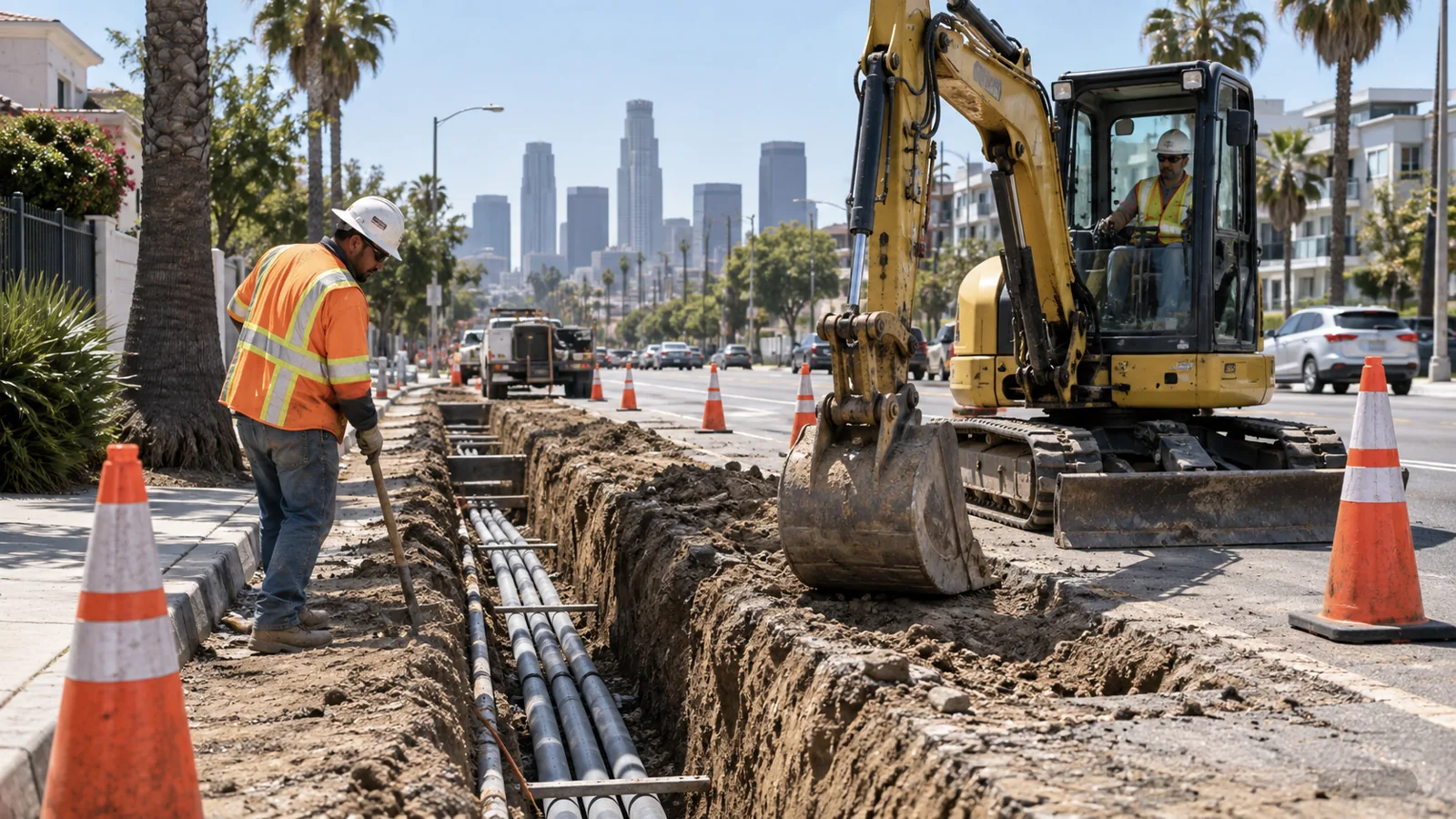
Excavation extends beyond an open trench
Work can include sidewalk cuts, pits, borings, conduit installation, utility connections, test holes, monitoring wells, vaults, and shoring that affects the lateral support of public property. Define the dimensions, depth, alignment, access points, equipment, staging, and restoration limits.
Sewer, drainage, electrical, and telecommunications work
Connections and infrastructure for sewer, storm drainage, electrical service, communications, and other utilities may cross sidewalks, parkways, curbs, streets, or alleys. Each segment can have different surface conditions, conflicts, and agency coordination. The utility owner’s authorization may be separate from permission to excavate or occupy City right-of-way.
Core coordination topics
- Utility locating and conflict review before digging
- Excavation protection, shoring, and safe pedestrian access
- Lane, parking, bike facility, or sidewalk impacts
- Equipment, spoil storage, plating, and construction sequencing
- Backfill, compaction, pavement or concrete restoration, and inspection
- Conditions affecting recently resurfaced streets or sensitive infrastructure
Planning documents that may be useful
- A plan showing work limits, dimensions, street features, and utility alignment.
- The proposed construction method and sequence, including boring or trench details.
- Traffic and pedestrian control information where public access is affected.
- Restoration details and responsible contractor information.
- Related utility, environmental, property, or agency authorizations when applicable.
See the excavation and utility service overview for help organizing the permit-path questions.
Frequently asked questions
Can private-property work need right-of-way review?
Yes. Shoring, tiebacks, connections, equipment, or access can extend into or affect the public right-of-way.
Can restoration extend beyond the trench width?
It may. Restoration limits depend on the surface, condition, applicable standards, and reviewing agency. Confirm the limits before pricing or scheduling.
Does every utility connection use the same permit?
No. Requirements vary by utility, applicant, location, construction method, and affected public infrastructure.
Official resources
Consult the Bureau of Engineering permits page and BOE Permit Manual, then confirm project-specific requirements with the utility owner and responsible City office.